



May 28, 2026
Italy's 7% Flat Tax for Foreign Retirees: A 2026 Guide
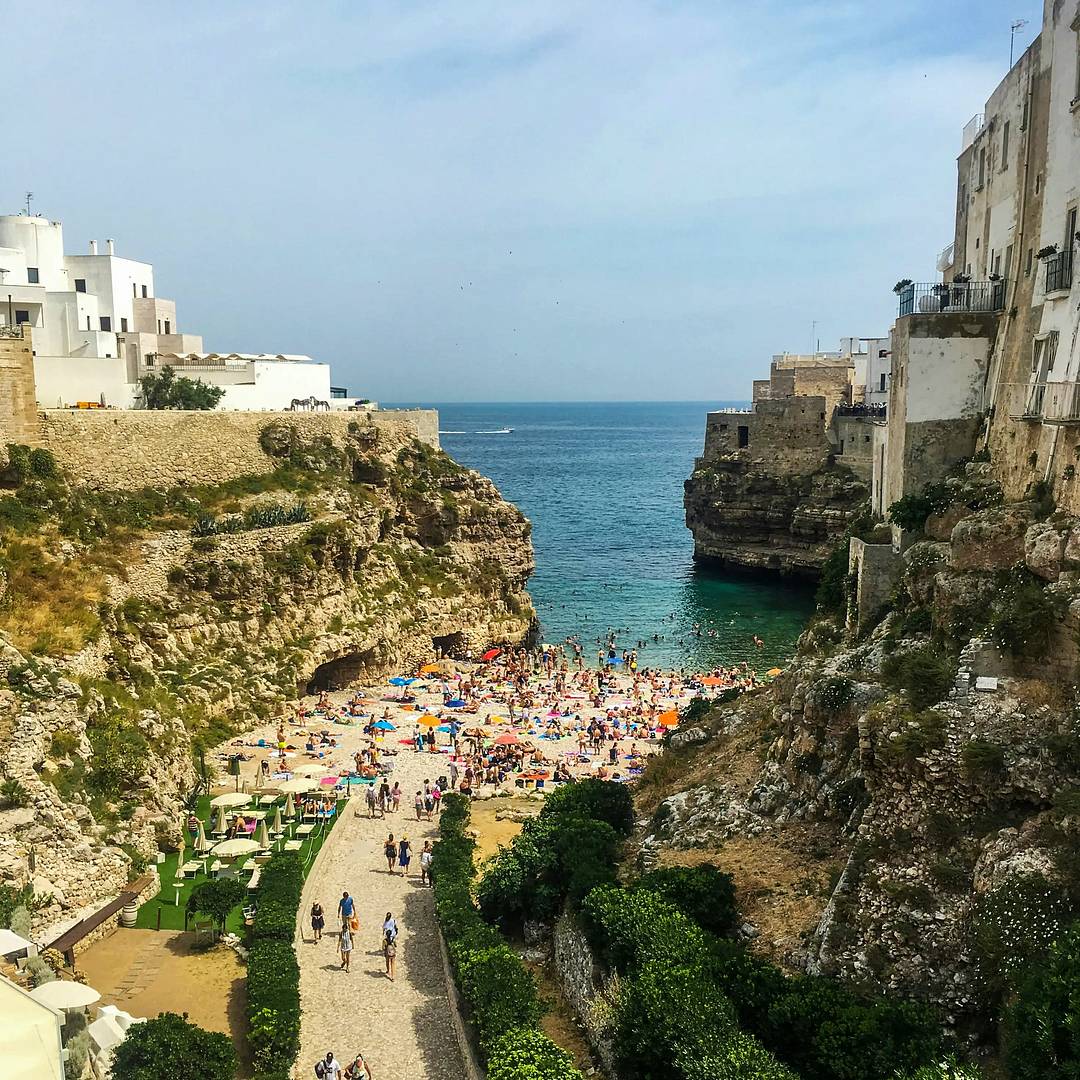
When clients ask us about Italy’s 7% flat tax, they have usually read three or four articles already and come away more confused than they started. That is not entirely their fault. A lot of what gets written about Article 24-ter is technically correct and practically misleading, because the regime is generally explained as a tax saving rather than as a relocation problem, and those are two very different things.
The April 2026 amendment is genuinely good news. It raised the population ceiling on eligible municipalities from 20,000 to 30,000 inhabitants, which means towns such as Ostuni, Noto, Pompei and Vico Equense, along with several places in the Cagliari belt, now sit inside the regime. For retirees who actually want to live a normal life rather than reinvent themselves in a hilltop village of 3,000 people, that is a meaningful change.
What did not change is the part that catches people out, which is the pension test. You can have a substantial income and still fall outside this regime, and you can have a modest income and slide neatly into it. It depends, more than most people realise, on the character of the money rather than the amount.
So before anyone falls in love with a town, a house, or a spreadsheet, it is worth slowing down and looking at the regime properly. That is what this article is for.
The short version
The 7% regime under Article 24-ter of the Italian tax code can apply if four things are true at the same time.
First, you receive a foreign pension that qualifies as pension income under Article 49(2)(a) of the TUIR. Second, you have not been Italian tax resident for the last five fiscal years. Third, you transfer your tax residence to a qualifying municipality, which broadly means a town of up to 30,000 inhabitants in the south of Italy or a designated central earthquake-zone municipality. Fourth, if you are not an EU citizen, you also need an immigration route that lets you live in Italy long term. For most retirees from the US, the UK, Canada and Australia, that means the Elective Residency Visa.
Get all four right and you can pay 7% on your foreign-source income for up to ten consecutive tax years. Get one wrong and the plan does not work, even if everything else looks immaculate on paper.
The reason I keep pulling those four threads apart is that they are routinely treated as one decision. They are not. You can qualify for the visa and miss the tax regime. You can qualify for the tax regime and have a visa file that a consulate will not accept. People who treat the two as the same thing usually find that out after they have already moved.
What the April 2026 change actually did
The amendment came in through Article 26 of Law 11 March 2026, No. 34, published in the Gazzetta Ufficiale on 23 March 2026 and in force from 7 April. It replaced “20,000 inhabitants” with “30,000 inhabitants” in Article 24-ter. That is the whole legislative change in one sentence, which tells you why so many of the breathless headlines about it overstated things.
The practical effect is much more interesting than the legal one. Under the old 20,000 ceiling, the eligible list pushed retirees towards villages that were often beautiful and almost always small. Some clients can do that and thrive. Many cannot, particularly those who want a hospital they can walk to, a pharmacy that stays open in February, a train station that goes somewhere useful, and a few cafés that have not shuttered for the winter.
Lifting the ceiling to 30,000 brings in towns where ordinary life is easier to assemble. In Puglia, Ostuni is the obvious headline; Manduria and several towns in the Valle d’Itria are part of the wider conversation. Sicily picks up Noto, which has been the dream town for a particular kind of British retiree for years. Campania brings Pompei and Vico Equense into the regime, which matters if Naples and the Sorrento peninsula are where you actually want to be. Sardinia adds towns around Cagliari such as Selargius, Assemini and Sestu, which give you the urban infrastructure of the capital without crossing back into the centro storico.
It is worth saying clearly that this was a geographic expansion, not a softening of the eligibility test. The map got wider; the front door is the same size as it was. Unfortunately, if your pension does not qualify, it does not matter how perfect Ostuni is in April.
Who actually qualifies
This is where I tend to lose people for about ten minutes on a call, and where you might want a cup of tea.
Article 24-ter sits on top of Article 49(2)(a) of the TUIR, which defines pension income for Italian tax purposes. The Agenzia delle Entrate then explained how it intends to read those provisions in Circular 21/E of July 2020, which remains the main interpretive document. The combination of those three things, rather than the headline rate, is what decides whether you qualify.
In broad terms, the income needs to be a pension, paid by a foreign payer, with a recognisable link to past work or to a regulated pension arrangement. US Social Security falls cleanly inside that description. The UK State Pension does. Workplace pensions from foreign employers and insurers usually do, although the precise structure matters. State pension equivalents in Germany, France, the Netherlands and other EU countries also tend to qualify. Pensions paid to former self-employed people can qualify where the link to past work is real.
What does not qualify by itself is investment income. Dividends, interest, capital gains, rental yields and portfolio drawdowns can all be taxed at 7% once you are inside the regime, but they will not get you in. This is the bit that catches a lot of well-off applicants by surprise. I have had clients with €5m portfolios and no pension stream who, on paper, look like ideal Italian residents, and who do not qualify for Article 24-ter at all. I have had others with a modest US Social Security cheque and the same portfolio, who do qualify, and whose investment income then sits inside the 7% bracket because the pension has opened the door.
Other arrangements need careful thought. Pensions paid by INPS or any Italian-resident pension institution are out, because the payer has to be foreign. Self-designed structures that try to look like pensions but are really just savings withdrawals tend not to survive scrutiny; Response to Interpello 246 of 2023 dealt with one such arrangement and excluded it. UK SIPPs are a particular favourite of mine to flag, because the right answer genuinely depends on how the SIPP was funded, what it was meant to replace, and how the income is drawn. They are not automatically in and they are not automatically out, and anyone with a SIPP needs to sort this out before they become Italian tax resident, not after.
There is also a residence-history test that people tend to forget. You must not have been Italian tax resident in any of the five fiscal years before you elect into the regime. That sounds simple, but Italian tax residence is not just about whether you felt like a resident. It looks at registration, where your habitual abode was, where your centre of interests sat, where your family was, where you owned property, and how much time you actually spent in Italy. If you already have a long Italian footprint, this needs to be sorted out before anything else, because no amount of clever planning gets around a finding that you were tax resident all along.
Where the regime applies
The geography is the part most coverage gets right.
The main eligible area is the Mezzogiorno: Abruzzo, Basilicata, Calabria, Campania, Molise, Puglia, Sardinia and Sicily. To this, you can add a number of designated central Italian municipalities affected by the 2009 L’Aquila earthquake and the 2016 to 2017 central Italy earthquakes, which sit in Lazio, Marche, Umbria and parts of Abruzzo. A 2022 amendment widened that earthquake-zone framework, but the current 30,000-inhabitant ceiling still applies to those towns, so the headline regions matter less than the specific municipality.
Early counts after the April 2026 amendment suggest that somewhere in the order of 74 to 80 additional municipalities are now inside the regime, with the biggest gains in Campania, Sicily and Puglia. Those numbers are useful as a sense of scale, but I would not let any client rely on a single town until we have checked it against the official post-amendment list and the current ISTAT population data. That check is now a two-minute job: our interactive map of every qualifying 7% tax town applies the statutory test to the current ISTAT figures, town by town. Town populations move; the regime’s geographic test moves with them at the point of entry.
The towns that do not work are the ones every brochure mentions. Rome does not work. Milan does not work. Florence does not work. Most of Tuscany does not work, and certainly the towns you have heard of do not. If your heart is set on Lucca or Cortona, this is not the regime you are looking for, and that is a useful thing to discover early rather than late.
How the Elective Residency Visa fits in
For non-EU retirees, the immigration question sits alongside the tax question and the two have to be solved together.
The usual route is the Elective Residency Visa, or ERV. It is designed for people who want to live in Italy without working, supported by stable passive income, suitable accommodation and private health cover. After you arrive on the visa, you convert it into a permesso di soggiorno, which you then renew in Italy.
There are a few things about the ERV that I find myself repeating almost every week.
The ERV is not a retirement visa in the formal sense; there is no minimum age. A 45-year-old with strong passive income can be a genuine candidate, although they may struggle to convince the consulate that they really intend to stop working. The visa is also not a remote-work visa. If you are still receiving a salary from a US, UK, Australian or Canadian employer, that salary remains employment income, regardless of where the laptop happens to be, and the ERV is not the right vehicle. Italy has a separate digital nomad route for those situations.
The ERV is not a property visa either, although owning a home in Italy helps with the accommodation point and shows a degree of commitment. Property ownership alone, however, does not grant one eligbility for an ERV. The application must go through the Italian consulate with jurisdiction over your home address before you move. Each family member needs their own visa and the income guidelines step up with dependants. And approval is, in the end, a discretionary decision. Files that tick every published box can still get refused if the overall picture is not persuasive.
The ERV accepts a wider range of passive income than the 7% regime does. That is why someone with substantial rental and dividend income but no pension may sail through the visa application and then fail the tax test. The opposite happens too. I have seen pension-rich applicants whose actual passive income is too thin, too irregular or too poorly evidenced for the consulate to be comfortable, and we have had to rebuild the file before we even start the tax conversation.
If you take only one thing from this section, take this: the visa and the regime answer two different questions, and they need to be checked together by people who do this work.
How many people actually use the regime
The 7% regime is not as obscure as some commentators suggest, but it is also not flooded with applicants.
The most recent MEF data, drawn from the Dichiarazioni dei Redditi statistical declarations for the 2024 income year, shows 933 taxpayers using Article 24-ter and roughly €37.6 million of foreign pension income brought in under it. That was up from 672 taxpayers in 2023. For comparison, the Article 24-bis high-net-worth flat tax had 1,631 adherents in 2024 and the impatriate worker regime had over 44,800.
So this is still a niche instrument. But it had momentum before the 2026 amendment, and the new map will widen the audience. I would expect the numbers to climb steadily rather than spectacularly, in part because the pension test remains a real filter.
Choosing a town, properly
Here is where I find the tax map becomes a poor advisor.
The tax saving on a comfortable retirement income can be a serious sum of money, and that is enough to bring Italy onto the shortlist for a lot of people. It is not enough, on its own, to choose between Puglia and Sicily, or between a coastal town and an inland one, or between a 4,000-person village and a 25,000-person working town with proper bus services. Those are quality-of-life decisions, and they tend to be the ones that decide whether a move sticks.
The questions I ask clients are unromantic on purpose. How hot is August where you are looking, and how do you cope with heat? How quiet is February in that particular town, and would you be all right with quiet? Where is the nearest emergency department, and how do you get there at three in the morning? Is there a train station that goes somewhere useful, and is the airport drive realistic in the rain? Is there a long-term rental market, or does the inventory dry up the moment the August tourists leave? Do you want an English-speaking community around you, or are you trying quite consciously to get away from one? And, almost always the most revealing question, would your spouse choose this town if the tax benefit disappeared tomorrow?
A useful frame, if you like a quick scan, is the regional one.
Puglia tends to be the easiest fit for retirees who want recognisable Southern Italy with real infrastructure. Bari and Brindisi airports are genuinely usable, the rental market in the Valle d’Itria is more developed than most of the south, and the food and wine culture is well established. The cost is, predictably, price pressure in the famous towns and serious summer heat and crowds.
Campania is messier and more dramatic. Vietri sul Mare has long been one of the more interesting eligible towns because of its Amalfi Coast position and rail access, and the addition of Pompei and Vico Equense under the new threshold makes the area more practical for people who want to live near Naples and the Sorrento peninsula without giving up the Mezzogiorno tax treatment. The trade-offs are obvious if you have spent time there: expensive coastal property, terrifying parking, narrow roads and intense summer tourism.
Sicily gives you scale. Three coastlines, major cities, the Baroque towns of the Val di Noto, Etna, and a culture that does not feel quite like the rest of the south. Noto becomes a headline option after the April change. Cefalù, Ragusa, Modica and Scicli already attract clients who want architecture and slow food without going feral about it. There is also a regional incentive that may in some cases layer with the 7% regime, but I would not build a move around it without sitting down with a Sicilian commercialista first.
Sardinia rewards people who genuinely want island life and are not put off by the travel friction. The Cagliari belt is now the more practical entry point for retirees who want urban services, and the interior gives you village life and overlaps with the Sardinian Blue Zone, which suits some clients and exhausts others. The north coast is a different property market entirely and not usually the right comparison for this regime.
The central towns are the part of the map that gets ignored, often unfairly. For clients who want hills, seasons, opera houses and proper winters rather than the deep south, parts of Le Marche and Umbria can be lovely. The catch is housing. Long-term rental stock in smaller affected towns is thin, property arrangements can be complicated, and you have to do the groundwork in person.
The rental problem nobody warns you about
I want to spend a moment on housing, because this is the issue that derails more well-thought-out plans than any tax provision.
Many eligible towns simply do not have a normal long-term rental market. Properties are inherited and kept in the family, used as second homes, left empty, or rented short-term in summer. The listings you find online may be holiday lets, not viable year-round homes, and the inventory will look thicker in February than it actually is, because half of those properties become unavailable when the season starts.
That makes the very sensible “rent before you buy” advice harder to follow than it sounds. It tends to work in larger or more internationally active places: Ostuni, Polignano a Mare, Martina Franca, the Lecce area, Noto outside high season, parts of coastal Abruzzo, the Cagliari belt, and the larger Campanian centres. It tends not to work in inland Basilicata, rural Calabria, small Sicilian interiors, smaller Puglian hill towns, or the central earthquake-zone villages.
The workaround I most often suggest is to base yourself first in a regional centre, such as Lecce, Bari, Brindisi, Catania, Palermo, Cagliari, Salerno or Pescara, while you actually look at towns. Tax residence can be moved into the qualifying comune once the property piece is real, and the regional centre gives you somewhere to live a normal life from in the meantime. It is not perfect, but it is far better than signing a lease in a town you have only seen in July.
What the regime will not do for you
It is worth saying, gently, what the 7% regime does not solve. It does not choose your town. It does not grant you a visa. It does not turn a salary into passive income. It does not rescue a pension structure that was never going to qualify. And it does not get you out of becoming a real, registered, ordinarily resident Italian taxpayer with all that entails, including healthcare integration, codice fiscale and Anagrafe paperwork.
The clients who do best treat the regime as one piece of a relocation plan, not the plan itself. The tax saving gets Italy onto the shortlist. The pension test decides whether the regime is open to you. The visa decides whether you can stay. The town decides whether you will still be happy in year three. All four pieces have to fit; trying to force one to compensate for another is the most common reason these moves stall.
How Why Wait Italy helps
We tend to start with the unglamorous part. Is the pension genuinely a qualifying pension, and is the rest of the income picture clean enough to support a visa? Which consulate will actually decide your case, and what is their current practice like? Which towns suit the life you want, rather than the one in the photographs? Is there a realistic accommodation path that does not depend on a property you have not yet seen?
For a fair number of clients, the most valuable answer is not a confident yes. It is “not yet”, or “not this town”, or “fix this piece of documentation before you sign anything”. That is the conversation we like to have early, because it is much cheaper to have it in the planning stage than after a lease, a removal, and a flight.
If you would like a clear read on whether the 7% regime fits your circumstances, book an eligibility review and we will go through it properly.
Frequently asked questions
How long does Italy’s 7% pensioner regime last?
It applies for the tax year in which you transfer your residence to a qualifying municipality and the nine tax years that follow, for a maximum of ten consecutive years. It is not renewable after that.
What happens if the town later grows above 30,000 inhabitants?
Eligibility is assessed at the point you validly enter the regime. A later ISTAT population change should not retroactively remove an existing beneficiary, although new applicants looking at the same town years later may get a different answer.
Can I qualify with investments but no pension?
Not on the strength of the investments alone. Investment income can sit inside the 7% bracket once you are inside the regime, but it does not get you through the door. You need a qualifying foreign pension stream.
Does US Social Security qualify?
Yes, it is one of the cleaner qualifying pension streams. The treaty position and the treatment of IRAs, 401(k)s and other US retirement accounts still need to be reviewed individually.
Can a UK SIPP qualify?
Sometimes. The answer depends on the structure, the source of the contributions and how the drawdown is taken. SIPPs need a proper look before anyone becomes Italian tax resident, not after.
How does this compare with Italy’s Article 24-bis flat tax?
Article 24-bis is the high-net-worth regime. It charges a fixed annual amount on foreign-source income - historically €200,000, rising to €300,000 for new entrants under Law No. 199/2025, the 2026 Budget Law - and it is not limited to southern towns or to pensioners. The 7% regime is narrower but usually far cheaper for retirees who qualify. Which one is right for a given client depends on the income mix, pension status and where they actually want to live.
General information only. Not tax, legal or immigration advice. Individual circumstances vary and qualified Italian advisers should be engaged before any decision.